Training of Law Enforcement Officers on Environmental Law, Processes and Procedures
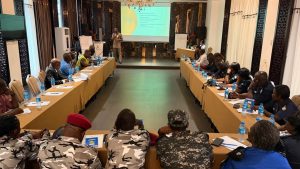
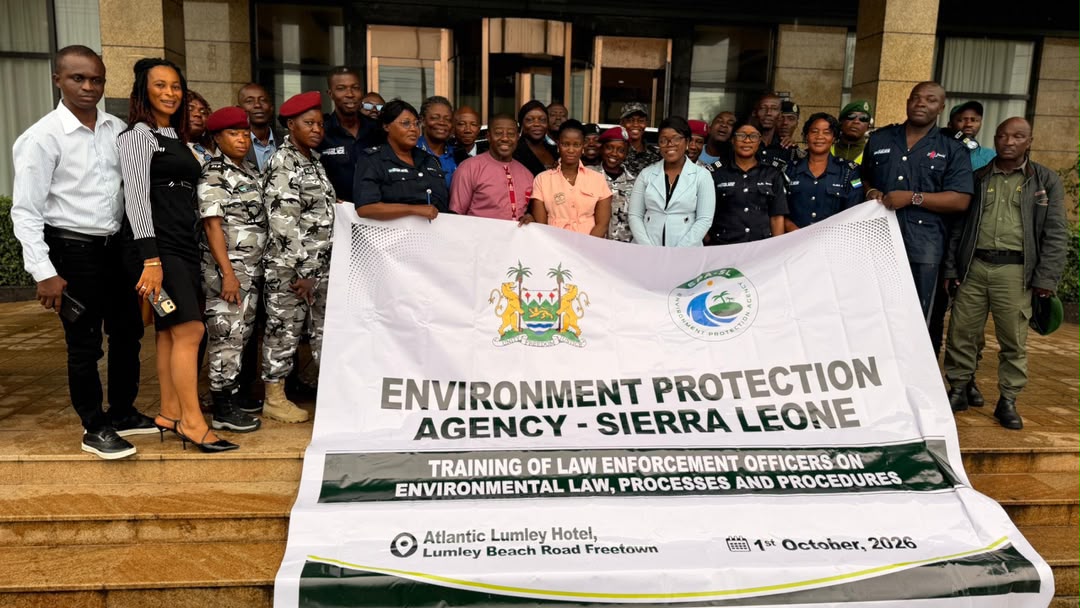
Together with the Sierra Leone Police Force, we have concluded a one-day training for police officers, investigators, and prosecutors to enhance capacity on environmental laws, what constitutes environmental crimes, and procedures at the Atlantic Hotel in Freetown.
Partnership, engagement, and financing are key enablers in our Transformation Strategy (EPATS), which closely aligns with our functions outlined in Section 12 (2) of the Environment Protection Agency Act of 2022, demonstrating our role in coordinating bodies that play a vital role in advancing a sustainable environmental agenda.
In his statement, the Director of Legal Affairs, Compliance and Enforcement, Tamba Sangbah, Esq., said ” Environmental law is very technical with specialised knowledge that has to be used when evidence is collected, samples are tested and preserved, investigations and matters prosecuted, all of which have to be done carefully to effect justice in the fight against environmental crimes.”.
He continued that the training was conducted nationwide, as previous engagements had been done for judges, and that the police force is instrumental to our operations as a regulatory agency, underscoring our desire to have a capable and cooperative partnership to execute enforcement operations. Tamba Sangbah, Esq., also applauded the support the judiciary and the police force have given in prioritising environmental crimes in the dispensation and administration of justice.
The Head of the Legal and Justice Department of the Sierra Leone Police Force, ACP Joan Bull-Moss, noted that the police acknowledge that the investigation of environmental crimes must be done with the cooperation of the EPA and other stakeholders in the justice sector. She pointed out the importance of the Criminal Procedure Act 2024 in ensuring lawful investigations, proper documentation, and a credible chain of evidence.
Describing the procedures involved in the investigation and prosecution of environmental crimes, she stated that the matters begin long before they reach the courtroom and include the making of proper incident reporting, evidence gathering, sample collection, and witness statements, which are all essential to successful prosecution. “Stronger collaboration from the early stages of investigations is required to make environmental enforcement lawful, fair, professional, and effective,” she concluded.
The training also covered other aspects of the EPA Act of 2022, giving a detailed analysis of our broad mandate and the operationalization of our EPATS.
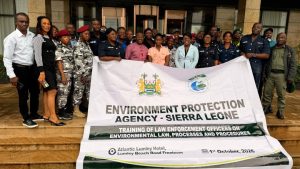
We concluded with a group photo, expressing our enthusiastic resolve to collaborate in building an environmentally secure future for Sierra Leone.